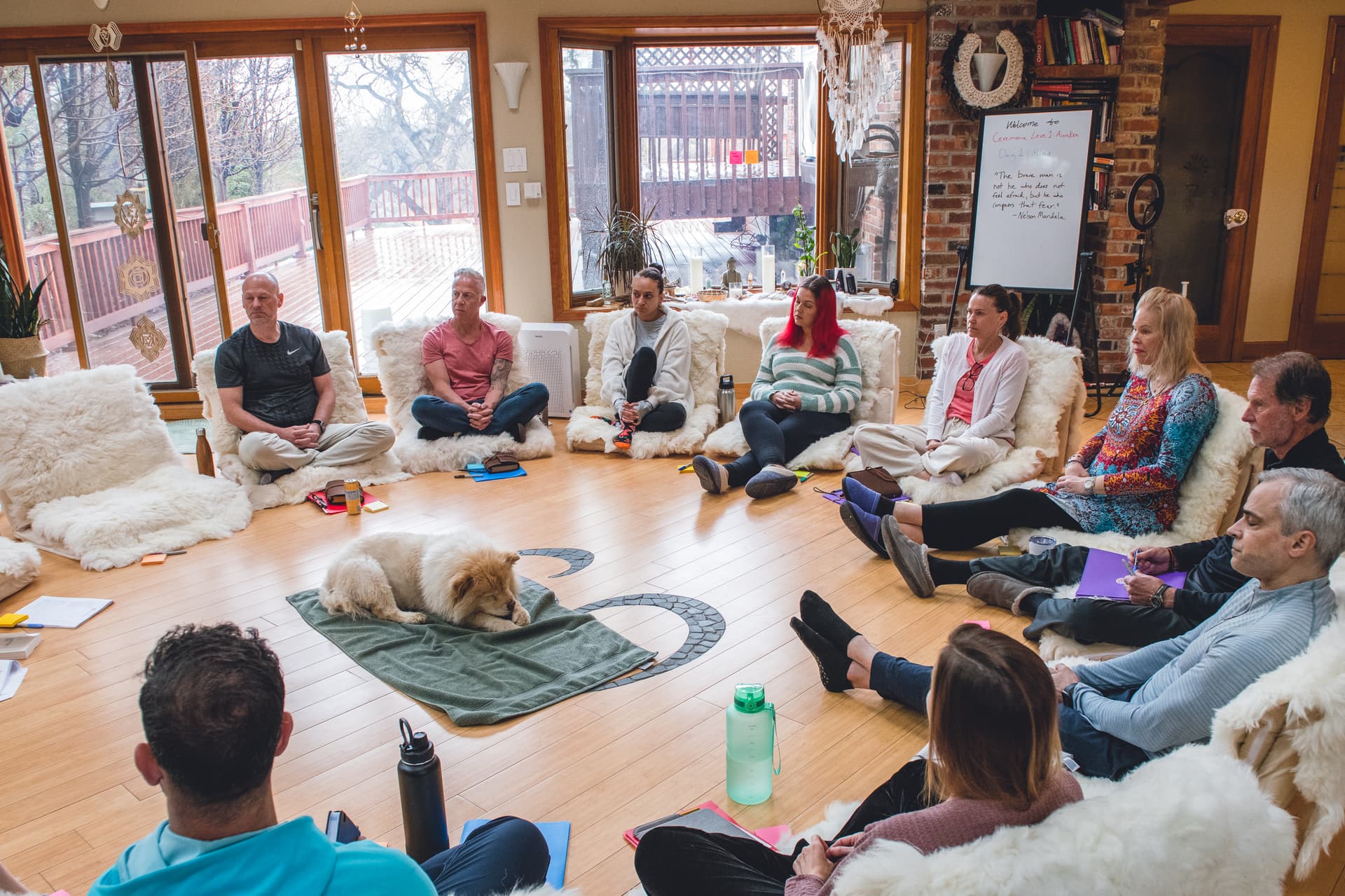
I teach circling first because curiosity opens us to what is, instead of closing us off from it.
A conversation with room to choose
In a circle, curiosity can sound like “I notice I am getting quiet; may I take a moment?” Another person might ask what that silence is like, without assuming they know the answer. The speaker can correct the question, decline to answer, or take a break.
Circling Institute describes its approach as attention to another person’s present experience. Different groups use different agreements and facilitation. Ask about confidentiality and consent before joining, and do not treat a group conversation as a substitute for therapy or crisis care.
What circling is
In a circle, one person speaks and the others stay with them. You say what is happening for you in real time. You get curious about what is happening for the other person. You notice, and you do not fix.
There are no scripts, no advice and no problem solving. It is presence and honest reflection, and it is harder than it sounds.
Why we use it
After ceremony, people often see how they relate to others. They notice people-pleasing, avoiding conflict, trouble receiving care, loneliness in a room full of people.
Circling gives you a place to practice something different with real people. You get to be seen without being judged, and you get to see someone else the same way.
Where it shows up
We practice circling during the retreat and in the integration calls that follow. The community is a big part of the work, so we give it real structure instead of leaving it to chance.