What integration means
Integration is the ordinary, unglamorous part of a psychedelic experience, including psilocybin integration. The ceremony itself is a short stretch of time. Integration is everything after: sleeping, eating, going back to work, having the conversation you were avoiding, and slowly deciding what to keep.
The word is used differently in different communities. Some use it for structured sessions with a clinician, some for a peer circle, some for a quiet notebook and a long walk. A 2023 review of the approaches used in clinical integration sessions found too little rigorous evidence to say that any one approach is effective. We say that plainly because it is true.
At Ceremonia we use a simple working definition. Integration is the process of making meaning from an experience and turning one or two parts of it into small, repeated actions in your life. Meaning without action tends to fade. Action without reflection tends to be forced. You need both.
It also starts earlier than most people expect. How you prepare shapes what you have to work with afterward, which is why our preparation guide and this page belong together.
What integration is, and what it is not
Four things people confuse it with
Integration is not therapy. Therapy is clinical care delivered by a licensed professional. Integration is structured reflection, practice and community. The two can sit side by side, and we are glad when participants have a therapist. Ceremonia does not provide therapy or clinical mental health care.
Integration is not a lesson to extract. You do not need to turn an experience into a neat moral by Friday. Some experiences are clear, some are confusing, some are plain. All of them are allowed to take time.
Integration is not a reason to change your life at once. Big decisions about work, relationships or money deserve the same care they always did. Give a fresh experience a few weeks before you act on a conclusion drawn from it.
Integration is not only for hard experiences. A beautiful experience also needs somewhere to land. People often find the pleasant ones are the easiest to lose, because nothing forces them to look again.
A practical first month, step by step
Here is a simple sequence you can use on your own. Adjust it to your life. The point is a gentle structure, not a program you can fail.
- Days 1 to 3: rest and ground. Sleep as much as you need. Eat regular meals. Spend time outside. Keep your calendar light and your decisions small. Do not try to explain the experience to anyone yet unless you want to. The goal of the first few days is a steady body.
- Days 3 to 7: write what happened. Spend ten minutes a day writing observations before interpretations. What do you remember? What did you feel in your body? What images, words or people came up? Keep facts and meanings in separate columns. "I felt lonely when the group went quiet" is an observation. "Nobody cares about me" is an interpretation that deserves a second look.
- Week 2: pick one thing to try. Choose one insight and turn it into an experiment small enough to do this week. If you noticed a wish for connection, invite a friend for a walk. If you noticed exhaustion, protect one evening. Write down what you will do, when, and how you will know you did it.
- Week 3: tell someone you trust. Share a small part of the story with one person who listens well. Tell them what you want from them: a listener, not an advisor. You do not owe anyone the whole account, and you can keep parts private.
- Week 4: review and adjust. Look at what you tried. What worked, what felt forced, what do you want to repeat? Keep the small actions that held. Drop the ones that did not. Then pick the next one. Integration is a loop you return to, not a finish line.

Integration practices that hold up
A short checklist you can use daily
You do not need all of these. Two or three you actually do will beat a long list you abandon.
- Sleep and food first. A tired, under-fed body makes everything feel harder to read.
- Journaling. Ten minutes. Observations first, meanings second.
- Movement or time outside. A daily walk is a respectable practice.
- Breath and stillness. Five quiet minutes lets what you noticed settle.
- One conversation. A friend, a peer circle, or a facilitator who knows you.
- One small action. Concrete, scheduled, and easy to check.
- A weekly check-in with yourself. Same day, same time, three questions: What did I notice? What do I need now? What is one action I can revisit next week?
Our posts on integration as an everyday practice and integrating ritual into daily life go deeper on turning these into habits.
Journaling prompts to start with
Pick one prompt a day. Write without editing. Nobody else needs to read it.
- What do I remember most clearly, and what do I only half remember?
- What did I feel in my body, and where?
- What surprised me?
- What do I want more of in my days? What do I want less of?
- Which part of this do I want to understand better before I decide anything?
- What is one small action that fits who I want to be, and when will I do it?
- Who in my life could hear a part of this story well?
Where to find support
Four kinds, and what each is good for
A trusted friend can listen and keep you company. They are not trained to guide you and should not be asked to.
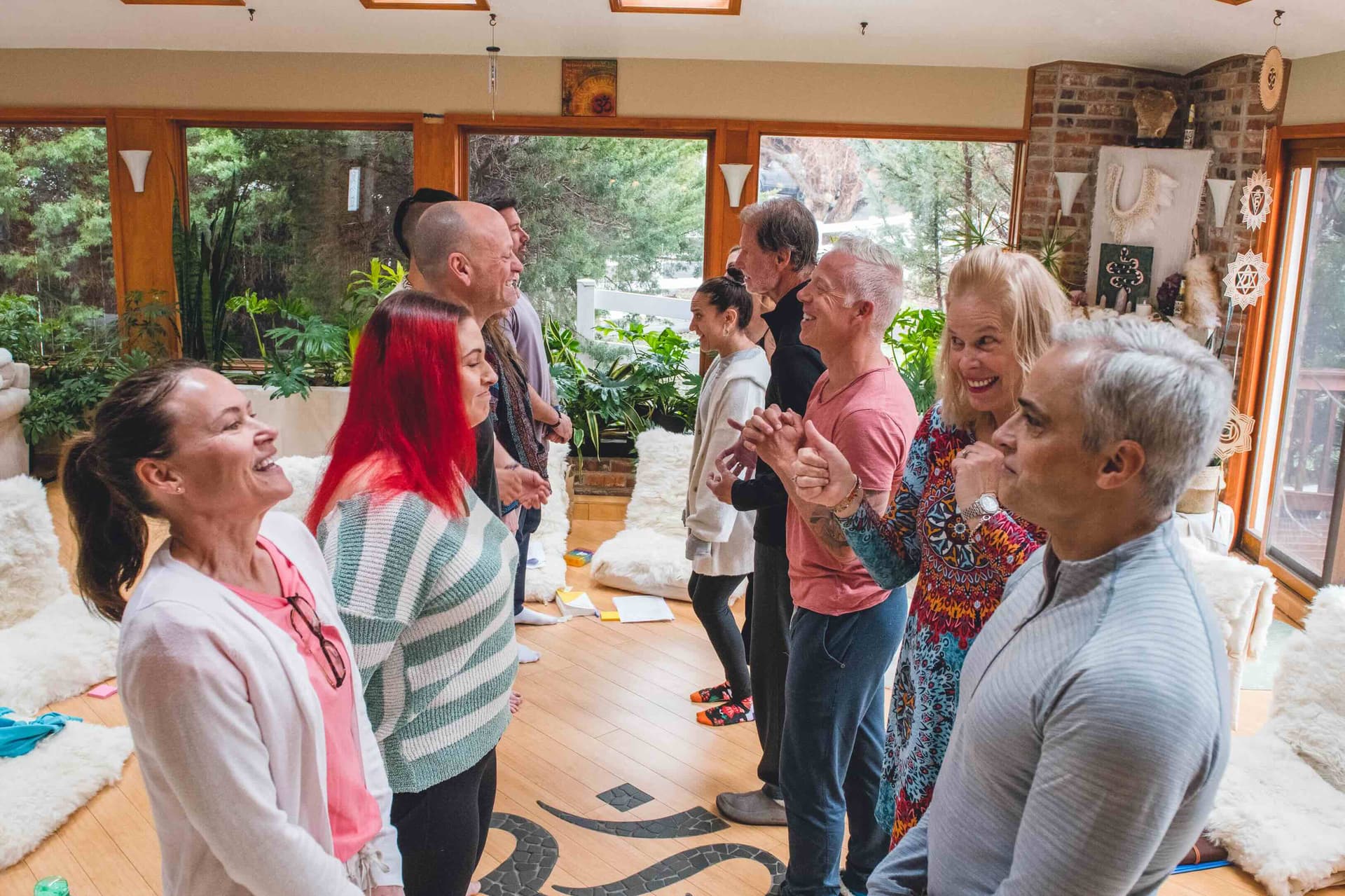
A peer circle offers shared experience. People in the same stage often say what you could not put into words. Ask about confidentiality and group rules before you share. The post on the power of community in psychedelic integration explains why this matters.
An integration facilitator or coach helps you reflect and plan. Ask about training, scope and how they handle things outside their scope. A good one tells you what they do not do.
A licensed mental health professional is the right person for persistent or painful symptoms. If you already see a therapist, tell them about your experience if you are comfortable. Our medications guide and screening guide cover questions to bring to your own clinician.
When to get professional help
Most difficult feelings after an experience pass with rest, time and support. Some do not. Reach out to a qualified professional if distress lasts or grows, if sleep or daily life stays disrupted, or if you feel unlike yourself in a way that worries you or the people close to you.
If you feel unsafe or are in immediate danger, call your local emergency number or crisis line right away. In the United States you can call or text 988. Do not wait for the next integration session.
Our guide to what to do when it gets hard lays out the steps in more detail.
How integration works at Ceremonia
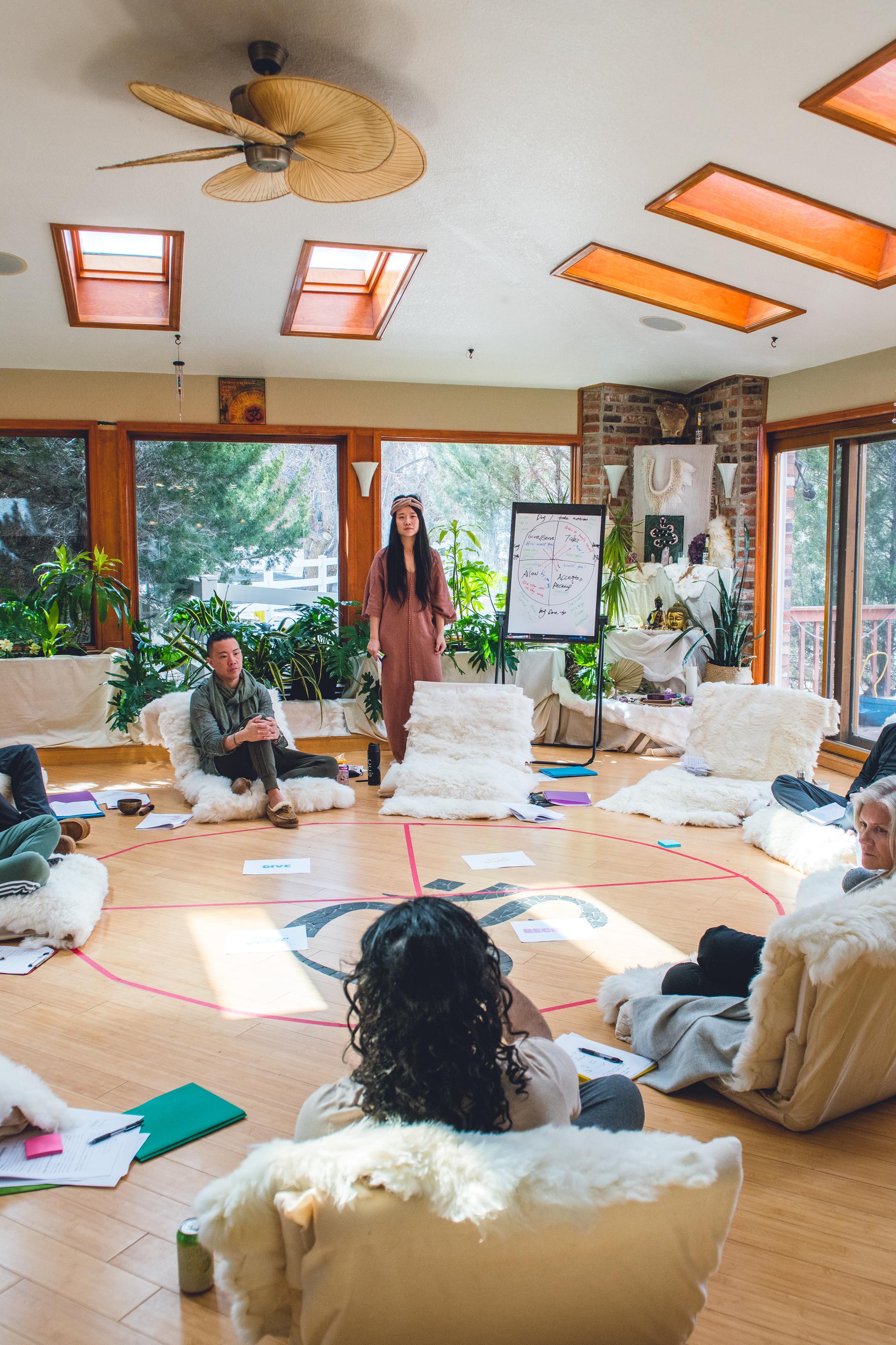
Our program is built around a simple shape: one month of virtual preparation, a one-week in-person retreat, then one month of virtual integration included, with an optional two-month extension. Integration is part of the design, not an add-on at the end.
- one month Virtual preparation before the retreat
- one week In-person retreat in Colorado
- one month Virtual integration, included
- 12-week Awaken at Home. After Awaken, its first month is your included integration
Awaken at Home: a structured program you do from home
For people who want structure, Awaken at Home is a weekly 90-minute live session, a weekly 60-minute peer session, online coursework and a community. Participants in our Awaken retreat get its first month as their included integration, and the remaining two months are the optional extension. It costs $2,995 on its own. It has no ceremony and no medicine.
It is education and community support. It is not therapy, and it is not a replacement for care from your own clinician. You can read the full details on the Awaken at Home page or see how it fits the full path on the Awaken retreat page.
Questions about psychedelic integration
What is psychedelic integration?
Psychedelic integration is the process of making sense of an experience and bringing what mattered into daily life. It usually involves rest, reflection such as journaling, small practical actions, and conversation with people you trust. It is support, not therapy.
How long does integration take?
There is no fixed timeline. Many people focus on the first few weeks, when the experience is freshest, and keep returning to it for months. Every Ceremonia retreat includes one month of integration. After an Awaken retreat, an optional two-month extension is available through Awaken at Home.
Is psychedelic integration the same as therapy?
No. Therapy is clinical care from a licensed professional. Integration is structured reflection, practice and community. They can work well together, and we encourage you to keep or find a therapist if that is right for you. Ceremonia does not provide therapy or clinical mental health care.
What should I do the first week after a psychedelic experience?
Rest, eat regularly, spend time outside and keep your schedule light. Write down what you remember before you decide what it means. Avoid making large life decisions right away, and choose one trusted person to talk to.
Is there a psychedelic integration course or coaching?
Awaken at Home is our 12-week program you do from home: a weekly 90-minute live session, a weekly 60-minute peer session, online coursework and a community. It costs $2,995 on its own. It has no ceremony and no medicine, and it is not therapy. For Awaken retreat participants, its first month is the included integration.
Who can help me with integration?
A trusted friend, a peer circle, an integration facilitator or coach, and a licensed mental health professional each play a different role. Ask any guide about their training and scope. For persistent distress, a licensed professional is the right first call.