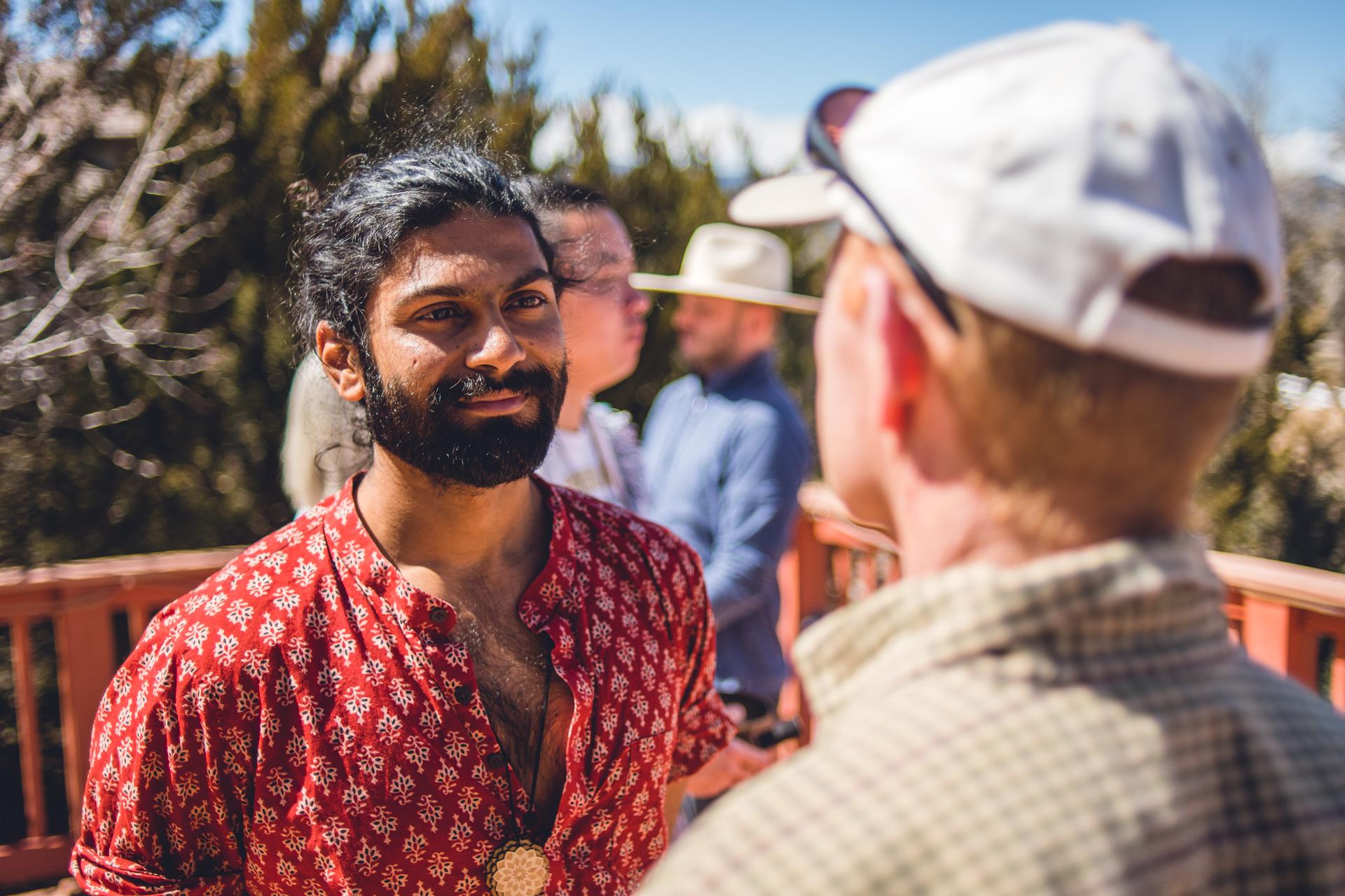
This is how we work and why. We prepare you, hold the ceremony, and stay with you after. The practices below are the ones we teach and use. They are our way of working, not research findings.
I believe the most important skill you can learn is how to hold yourself, so you learn the tools yourself.
Austin Mao
Four things we hold deliberately
Three Pathways
Psilocybin, ayahuasca, and at-home, each serves a different need.
Not every medicine, format, or setting is right for every person. We offer three distinct pathways so that the container matches the person, not the other way around. Understanding the differences before you choose is part of the preparation.
Lasting change comes from within, not from the medicine alone.
Ceremonia uses an Internal Family Systems lens: the parts of you that carry pain, protect old wounds, and resist change are not enemies. They are the work. Ceremony can give you a different view of those parts, but learning to listen to them is something you practice before and after.
What you experience matters less than how you move through it.
Participants often expect specific visions, emotions, or insights. The ceremony delivers something else entirely, and that is not a failure. Our philosophy centers the quality of presence over the content of the experience. A quiet ceremony can be as transformative as a dramatic one.
Integration is where the ceremony actually happens.
The medicine creates an opening. What you do in the weeks that follow determines whether that opening closes or expands. Integration is the real work: the daily check-ins, the weekly group calls, the ongoing practices.
Not medical treatment. Ceremonia does not provide medical treatment, diagnose conditions, or claim therapeutic outcomes. Our sacramental practice is not a substitute for psychiatric care, therapy, or medication.
Not religious doctrine imposed on participants. Participants are not required to hold any particular spiritual or religious belief. Our faith framework shapes how we hold ceremony, it does not prescribe what participants should experience or conclude.
Not a promise of outcome. We make no promise of healing, insight, or relief. Ceremony may open a door. Whether and how you walk through it depends on factors we cannot control or predict.
Not one-size-fits-all. We screen carefully because no container fits every person at every moment. If this is not the right time or setting for you, we will tell you, and we will try to point you toward what might serve you better.
Our approach brings attention to thoughts, emotions, body sensations, and relationships. Each practice offers a different question. Circling asks what is happening between people; mindfulness asks what is happening now; a parts perspective asks what a response may be trying to protect. None gives a complete account of a person.
A participant who notices frustration in a group might first feel their feet on the floor, then ask for a pause or name what they need. That is an example, not a prescribed sequence. Participation and disclosure remain choices. Trauma-informed principles emphasize safety, collaboration, and voice throughout the process.