What to look for in a psilocybin retreat
Look for six things: real screening, a medical review by a qualified clinician, a clear facilitator-to-participant ratio, structured integration after you go home, a written emergency plan, and a consent and touch policy you can read before you book. Setting, food and price matter, but they come second.
A retreat is more than the ceremony days. It is the preparation before, the retreat week, and the support after. Compare all three parts, not only the location photos.
This guide gives you the questions to ask, what a good answer sounds like, and what should make you pause. It is fair to every kind of retreat. A smaller, simpler program can be safe, and a polished one can be careless. The questions tell you which is which.

How to choose a psilocybin retreat in six steps
Give yourself a few weeks. Rushing is a common mistake, and a good retreat will not pressure you.
- Get clear on what you want. Write down in plain words why you are considering a retreat and what kind of support you want. Keep it about your intention for the experience. This helps you tell whether a retreat's style fits you.
- Shortlist three retreats. Look at the structure of each one: how long it runs, how many people attend, what happens before and after, and who leads it. Ignore star ratings and sales language at this stage.
- Ask every retreat the same questions. Use the checklist below. Send the same list to each retreat and keep their answers side by side. Notice who answers directly and who deflects.
- Talk to a human before you pay. A good retreat offers a call with a real person from its team. Use it to ask about your health history, your medications and your worries. Notice whether you feel heard.
- Check the paperwork. Read the consent form, the refund and cancellation terms, and the emergency plan. If they are not shared before booking, ask for them. If they are still not shared, that is your answer.
- Plan the return home. Before you commit, know what integration support is included, for how long, and what it costs. Block time off work for the days after you return.
Psilocybin retreat safety checklist: 10 questions to ask
Use this list with any retreat, including ours. For each item we describe what a good answer sounds like.
1. Screening. Ask: how do you decide who can attend? A good retreat has an application or intake and a conversation with a real person, and it is willing to say no. If everyone is accepted, screening is a formality. At Ceremonia, the free connection call is a conversation with someone on our team.
2. Medical review. Ask: who reviews my health history, and what are their qualifications? A good answer names a clinician. At Ceremonia, a nurse practitioner reviews every medical intake. Certain medications and health histories can make a retreat unsafe, so a medical review is not optional.
3. Medications. Ask: what is your policy on prescription medication? A good retreat tells you to involve your own prescriber and never to stop a medication on your own. Ceremonia's position: Your prescriber leads any medication taper, and tapering often takes one to two months.
4. Facilitator ratio. Ask: how many facilitators are there per participant, and are they present for the whole ceremony? Fewer participants per facilitator means more attention. At Ceremonia the standard is at least one facilitator for every four participants. Group size matters too: our retreats take up to 20 participants.
5. Who leads. Ask: who will lead the ceremonies, what is their training and experience, and can I talk with them before I arrive? A good retreat names its facilitators and tells you who is responsible for safety. You can meet our team.
6. Emergency plan. Ask: what is your plan if someone has a medical or psychological emergency? You want a written plan, a named person responsible, a known distance to the nearest hospital, and someone with medical training on site. At Ceremonia, Jo Ann Forristal, a family nurse practitioner, is on site during the retreat. See also what happens when it gets hard.
7. Consent and touch policy. Ask: what is your policy on physical touch, and can I read it? A good policy asks permission, lets you refuse at any time, and sets clear limits. It is written down and shared in advance. Vague answers here are a serious warning sign.
8. Integration. Ask: what support do I get after I go home, for how long, and who provides it? Our own structure is one month of virtual preparation, a one-week in-person retreat, then one month of virtual integration included, with an optional two-month extension. Whatever the format, support after the retreat is part of safety, not an upgrade.
9. How the retreat operates. Ask: how does the retreat operate, and under what framework, in the place where it is held? Rules differ by state and country, and they change. A good retreat explains its framework in plain language and does not wave the question away.
10. Refunds and honesty. Ask: what happens if screening shows the retreat is not safe for me? Ceremonia's policy: If our screening finds the retreat is not safe for you, you get a full refund of everything you paid, with no fees. Be cautious of guarantees and of promised outcomes. Nobody can promise how your experience will go.
Green flags and red flags when comparing retreats
Use this side-by-side as a quick scan after you have your answers. One red flag is a reason to ask more. Several is a reason to walk away.
Green flags: a conversation with a real person before you pay. A medical intake reviewed by a clinician. A stated facilitator ratio. A written emergency plan. A consent and touch policy you can read. Integration included or clearly priced. Honest language about risks and limits. A willingness to say no to you.
Red flags: no health screening, or a form nobody reads. Pressure to book fast or a countdown timer. Promises of a specific outcome or any guarantee. Claims that the medicine will fix a particular condition. Advice to stop medication on your own. No named person responsible for safety. Secrecy about who leads the ceremonies. A refusal to share policies in writing.
What matters less than people think
Price, location and photos are real factors, but they do not tell you whether a retreat is safe. For reference, the Ceremonia Awaken retreat starts at $5,995, with lodging and meals included. Always ask exactly what a price includes: lodging, meals, travel, preparation, integration and any extras.
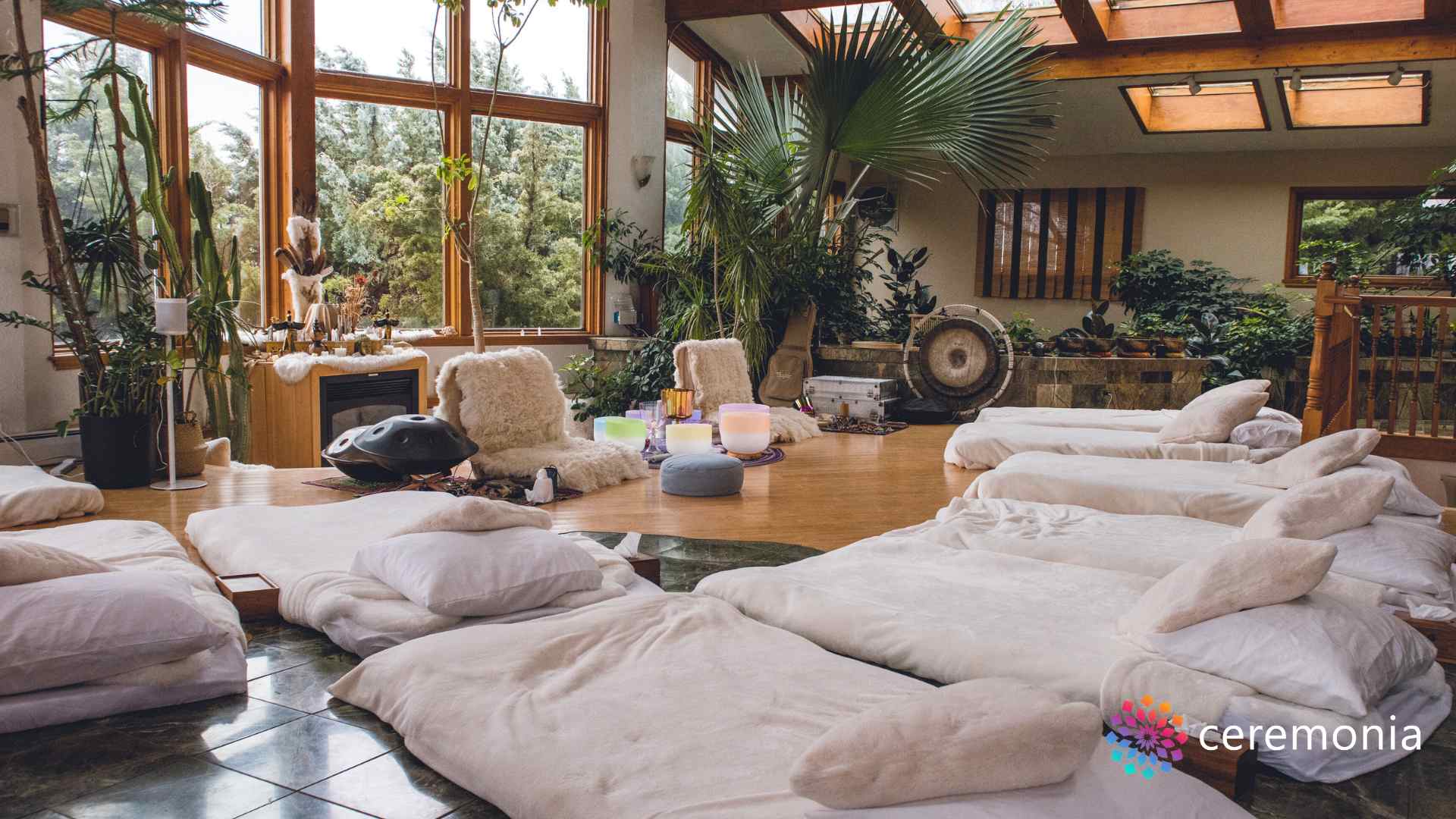
Beauty of the setting helps you relax, and that matters. But a lovely venue with weak screening is a worse choice than a plain one with careful screening. Put the checklist first and the scenery second.
Reviews help when they are specific and recent. Be careful with a wall of identical five-star comments, and read what people say about preparation and aftercare, not only the ceremony.
Is a retreat right for you right now?
A retreat is not right for everyone, and not right for everyone right now. Some medications, some health histories and some life moments are a reason to wait. A responsible retreat will tell you so, even when it costs them a booking.
If a retreat does not feel right after you have asked your questions, that is useful information. You can decline, take more time, or choose a different kind of support. Nothing about this decision has to be quick.
Psilocybin is a powerful substance. Nothing in this guide is medical advice. Talk with your own doctor about your health and medications before you decide.
Questions people ask about choosing a retreat
How do I choose a safe psilocybin retreat?
Ask every retreat the same questions about screening, medical review, facilitator ratio, integration, emergency planning, and consent and touch policy. Compare the answers in writing. A safe retreat answers directly, shares its policies before you pay, and is willing to turn you away.
What questions should I ask a psilocybin retreat?
Ask who screens you and how, who reviews your health history, how many facilitators there are per participant, what the emergency plan is, what the touch policy is, what integration support is included, and what happens if you are declined. Ask for each answer in writing.
How much does a psilocybin retreat cost?
Prices vary widely, so compare what is included, not only the headline number. Ask about lodging, meals, preparation, integration and travel. Ceremonia's Awaken retreat starts at $5,995 per person. If our screening finds the retreat is not safe for you, you get a full refund of everything you paid, with no fees.
What facilitator ratio should a psilocybin retreat have?
A lower number of participants per facilitator means more attention for each person. Ask for the ratio during ceremonies specifically. Ceremonia's standard is at least one facilitator for every four participants.
Do I need integration support after a psilocybin retreat?
Yes. Plan for it as part of the retreat, not an extra. The days after a ceremony are when people work out what to do with what they noticed. Ask what is included, how long it lasts and who provides it.
What are red flags when choosing a psilocybin retreat?
No real health screening, pressure to book quickly, guarantees or promised outcomes, advice to stop medication alone, no written emergency plan, and unwillingness to share policies in writing are all reasons to pause or walk away.